|
(Continued from page 32)
The woman had a very clipped, abrupt delivery - almost like a sergeant major barking out orders on a parade ground.
The actual messages had a simple format. After the musical marker the woman would shout out the headings for the five figure groups to follow, which was usually for three or four separate addresses. As:
34344/33 45455/22 35577/26
Again, the "/" symbol was said as "trennung". After repeating these group headings for about two minutes, "achtung" was sent and the message for the first recipient (34344) followed - in this case 33 five figure groups. After the transmission the gongs would usually start again, after which new texts were sent. This station used only 3258. It had an early morning schedule of 0400-0600 UTC and a main evening schedule of 1700-2100. It also popped up once on 5415 at 2100 but to my knowledge this was not repeated. I might add that this station may have had extra transmissions during the middle of the day but reception on these frequencies at my location was usually not possible, making it very difficult to check.
As with the previous station, towards the end of 1989 the schedule became increasingly chaotic, with the amount of traffic diminishing so that near the end the transmissions were aired only weekly. The station finally left the air around May, 1990.
NUMBERS NEVER CEASE
These two stations, for decades daily broadcasters to thousands of presumed spies in the west, had finally signed off for good. At the time it seemed the unification of Germany would end the need for these broadcasts. But a quick scan through the shortwave bands proved this was not the case! As it turned out, the two stations I've described were the only ones with apparent connections to Germany which closed down. Many others were still sending coded groups. What was going on? Later, it turned out that the amnesty given by the German government to ex-members of the East Germany spy agency was not being taken advantage of to any great degree. Apparently only a few hundred of the former Stasi agents had turned themselves in.
But this left thousands of spies still at large, probably with their cover still intact and able to provide their new masters with priceless economic and technical information at greatly reduced cost. The alternative would have been for the KGB or whoever the new masters are to have to set up a new spy network which could take years to develop. By recruiting the former East German spies who were already in situ the new bosses would save a great deal of time and money. The KGB was probably the ultimate beneficiary of the spy's information anyway. The East German middleman had been cut out.
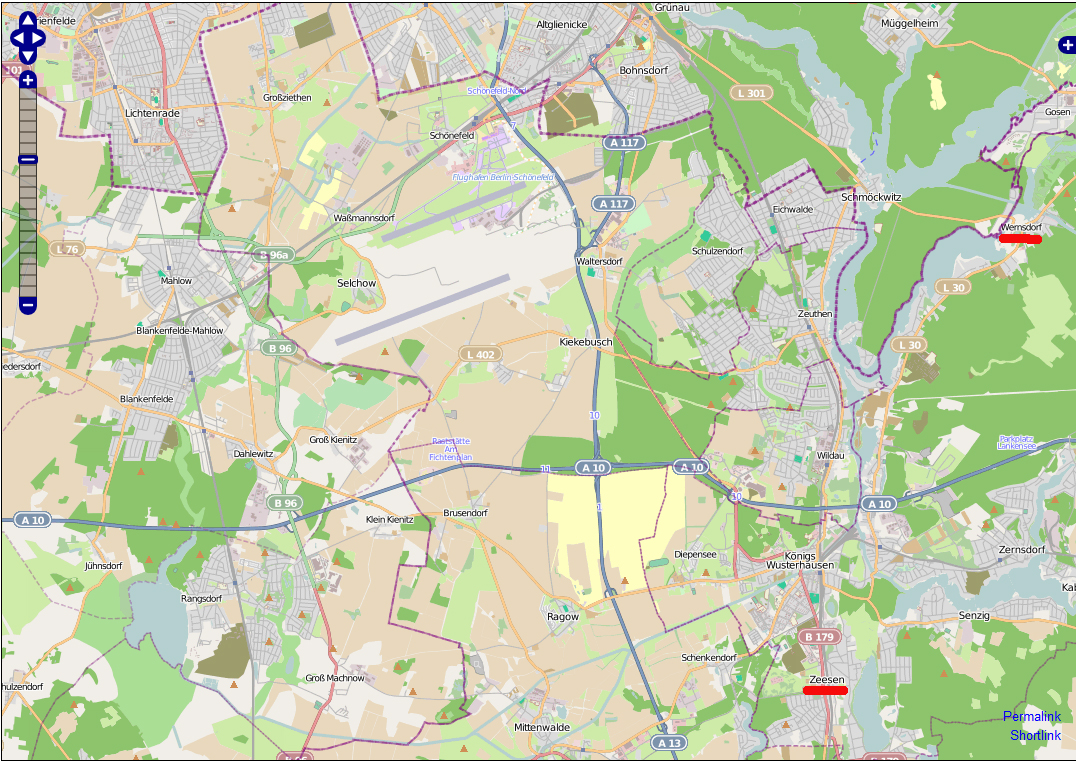
This was all not quite as straightforward as it seems, however. It turns out that the transmitter site for the two previously mentioned stations was a place called
Wilmersdorf*, just outside Berlin. Now, of course, the site is in unified Germany and therefore cannot be used as a sender of coded messages to spies in the west anymore. The locations of the transmitters used for stations that continue to broadcast is another puzzle. They may be using more remote sites or perhaps transmitting facilities at embassies located in the west. Certainly some of the roofs of these embassies look like enormous antenna farms. These antennas are part of a communications system used to transfer information to and from the home country. All of this is quite above board and widely practised. It would, however, be relatively simple to hook up a voice machine, which, instead of communicating with home, would transmit coded messages to spies in the surrounding countryside. This would go some way toward explaining why so many monitors, on hearing numbers stations, have observed that the signals strengths were extremely high. I have often been amazed at the sometimes stupendous signals strengths involved, even when those from high power international broadcast stations were mediocre. The embassy explanation goes some way toward explaining this. It has also been said that mobile transmitters could be used. Anyone who has seen the antennas used by various countries' shipping might agree.
Update 2011:
*From Detlev in Germany :
At the end of chapter 1 you
have written." It turns out that the transmitter site for the two previously
mentioned stations was a place called Wilmersdorf, just outside Berlin.�
Wilmersdorf is a part in the middle of West-Berlin, you mean Wernsdorf, where
the receiving station was, Zeesen was the transmitter site, remote controlled
from Wernsdorf.
Part Two
STATION TYPES
AND FORMATS
The transmission modes used by numbers stations are very diverse. In earlier years the AM full carrier mode was the most common type, with upper sideband a close second. Nowadays, USB probably just shades it. Only one station has been noted using lower sideband. Of course, Morse code stations (CW) are used and they transmit mostly in full carrier mode rather than the CW mode used by commercial Morse code stations. This means that an ordinary shortwave receiver can be used to pick up these Morse signals and no beat frequency oscillator (BFO) is needed. The use of AM mode, of course, means that a normal-looking receiver can be used by the recipient so it will not attract undue attention, although this isn't always true. The 3258 station mentioned earlier was often interfered with by another German numbers station using 3262. When both stations were in operation it was possible to hear two signals at once, making it difficult to copy either one. So a receiver with a narrow bandwidth had to be used. Similarly, there was a Slavic language station on 3228 which now and again suffered interference from a German station on 3232.
THE SWEDISH RHAPSODY STATION
So what are the stations still in operation? Here is one. As suggested by the heading this station's marker is the "Swedish Rhapsody". It's the same tune that was once used by Radio Sweden as its interval signal. The version used here is not the famous Mantovani rendition popular in the 1950's, but a version played on a rather cheap-sounding music box. The music box plays the first couple of bars of the tune until five minutes after the hour. Then a very soft-voiced woman calls out the five figure group for a minute or so and then says "achtung" and goes into the five figure text. No group counts are given in the preamble and the number of headings seems to depend on the time of the broadcast. For example, every Saturday evening there are messages for three addresses. On other occasions, notably in the midweek period, the messages are intended for perhaps only one recipient.
The schedule:
Sunday at 1800, 2300
Tuesday at 2100
3850 - Tuesday at 2100
4779- Sat/Sun at 1900, 2000, 2100
4832- Tuesday at 2200
5340 - Saturday at 1900, 2000, 2100
5748 - Wednesday at 1600, 1700, 1800 Tue/Wed/Sun at 2000 Mon/Wed at 2200, 2300
6200 - Mon/Wed at 2200, 2300
6507 - Saturday at 1900, 2000, 2100
6901 - Sunday at 1400
8188 -Sunday at 0800
9457- Sat/Sun at 1000
11618 - Wednesday at 1300, 1400
Some of these broadcasts are, of course, repeats. For example, the Saturday 1000 transmission is repeated at 2000 on the same day and also on Sunday at 1000. In addition, the Saturday 1900, 2000 and 2100 broadcasts are all sent on three frequencies at the same time: 4779, 5340 and 6507. However, broadcasts running on three frequencies simultaneously, as this one does, are quite rare.
Another oddity are the 2200 and 2300 Wednesday transmissions on 6200 (which, incidentally, can be heard accidentally by people listening to the BBC World Service on 6195). The woman on this occasion pops up between the tunes and counts "1-2-3-4-5-6-7-8-9-0" in German. On all other broadcasts the five minute period before the traffic is all music.
A very strange incident occurred one Saturday in June, 1990. At 2000 on 4779, 5340 and 6779 the musical marker played as usual and at 2005 the woman gave out the three headings which, on this occasion were 68803, 73719 and 20059. When the woman went into the five figure text for the first heading (68803) the groups were either 64646 or 46464! These two groups were repeated over and over again from 2005 to 2010 when the text abruptly changed to the usual random numbers. The five figure groups for the other two headings were also the usual random numbers. The repeat at 2100 produced the same things. Shortwave monitors who decode radioteletype signals will instantly recognise 6464646464 as the numerical equivalent of RYRYRYRY, which RTTY stations send as a test transmission.
THE N N N STATION
This is the first multilingual station we shall look at. Its marker consists solely of the letter "N" sent in Morse Code CW, repeated slowly for five minutes. The station has been on the air for sometime and is still very active. Over the years it has appeared on many different frequencies at many different times. The station uses three languages: English, French and either Yiddish or German - probably Yiddish, as the numbers used resemble Yiddish more than any other station. 1-2-3-4-5-6-7-8-90 in Yiddish is:
"eins zwei drei vier funf sechs siben acht neun null"
There is some doubt about whether some German numbers stations are in fact in Yiddish. It is difficult to say, one way or the other, just by listening to the numbers themselves. Similarly, certain Slavic language stations are difficult to identify positively as the numbers are so similar. I will agree that the numbers used by this station more closely resemble Yiddish. One thing is certain: no German or Yiddish station uses the official pronunciation for number "2". The "zwei" sounds too much like the number "3" (drie) to be readily differentiated over shortwave so every station uses the word "zvo" or "svo" instead. In addition, many stations change certain numbers to improve the chances of being correctly received. For example, the number "5" (funf) is often said as "funnef'. This makes it sound like the Yiddish number "5", so one has to be careful.
In the mid-80's the woman's voice used on the station was high-pitched, with a staccato delivery. The same woman was used for all three languages. It seems strange that the operators of this set-up couldn't do better. It was hard not to laugh at her delivery, it was that bad. Around December, 1988, she was replaced but the change was barely an improvement. They went to the other extreme - a slow, lazy, laid-back sound, as though the woman was on powerful tranquillisers. This woman's voice continues in use today. One other minor change occurred with the changeover: at the end of the French messages the old voice would say "fin". Now the word "finis"is used.
The formats of the three different languages are identical. On the hour the CW "dah-dits" are sent until five minutes past when the woman announces the group count ("Groups 21, Groups 21") and then goes straight into the five figure text. The termination is either "end", "ende" or "finis". The mode used is mostly AM, although the upper sideband is usually enhanced.
Over the years the schedule has altered somewhat so all the frequencies given may not be active at this time.
Schedule:
(EE=English, FF=French, GG-German)
4021 - 0500(GG), 2100(GG), 2200(GG)
4054 - 2000(GG), 2100(GG
4545 - 2000(GG), 2100(GG), 2200(GG)
4630 -2100(FF)
4645 - 2100(FF)
4740 - 1900(FF), 2000(FF)2
4925 - 2100(GG)
5177 - 1900(FF), 2100(GG), 2200(FF)
5425 - 2000(GG)2
5880 - 1800(GG) 6765 - 2000(GG)
6850 - 0600(EE)
6997 - 0l00(EE), 12900(EE), 2000(EE)
7655 - 1900(EE), 2000(EE), 2200(EE)
Again, repeats are common. For example, the 1900FF text on 5177 on Tuesday is repeated at the same time two days later. The weekend German broadcasts are noteworthy. All the following times and frequencies are the same texts:
Saturday 2000 - 5425 & 6765
Saturday 2100-4925
Sunday 2000 - 5425 & 6765
Sunday 2100-4925
(
Continued on page 34)
|
|
